FRESH
Federated data driven decision support for crohn's disease
Crohn's disease (CD) is a lifelong inflammatory disorder of the gut with a heterogeneous
clinical presentation and treatment response. To find an effective and safe treatment,
trial-and-error introduction of treatment options is standard care since there are no
markers to predict drug effectiveness or safety. This approach results in high health-care
costs driven by expensive drugs, health care utilisation, and productivity losses.
Personalised risk assessment is not always and patients preferences are rarely taken into
account when selecting a treatment strategy. Randomised controlled trials failed to
improve this strategy because the included population is not representative of the Dutch
CD population (particularly the elderly, those with comorbidities and women are
underrepresented). We hypothesise that clinical decision support tools (CDSS) tools
based on real world outcome data from large cohorts can decrease delay in selecting the
optimal treatment, thereby preventing prescription of ineffective drugs, health care
utilisation and productivity losses and decrease decisional regret. In this context the
DEDUCE consortium (CNT01275CRD4042) developed a CDSS for 2 crucial moments in
the patient journey of CD. This CDSS is mainly based on IBD patients living in
South-Limburg. The objective of this current proposal is to expand this CDSS to a tool
applicable to all CD patients in the Netherlands and include outcomes important to
patients and psychosocial and lifestyle confounders. We aim to learn from multicenter
and multi source data, from a distance, while preserving patients privacy, rather than
collecting data in one location. Therefore FRESH will develop a federated data network
using the personal health train. The approach has previously been successful in making
Dutch proton radiotherapy patient data available nationally (ProTrait). The Federated
Data network and IBD-data-model developed in FRESH will greatly enhance personal
medicine by enabling development of CDSS for all key treatment decision points in CD.
This project is funded by a grant from Health Holland, Dutch Top Sector Life Sciences and Health (‘Topconsortium voor Kennis en Innovatie’), awarded in 2022.
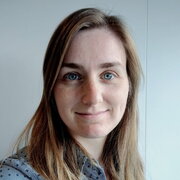
The Project Lead
The Team

Partners
- Maastricht University, Maastricht, The Netherlands
- Maastricht University Medical Centre+, Maastricht, The Netherlands
- Universitair Medisch Centrum Groningen, Groningen, The Netherlands
- Stichting Radboud universitair medisch centrum, Nijmegen, The Netherlands
- IBDREAM registry, Enschede, The Netherlands
- Janssen-Cilag B.V., Breda , The Netherlands
- SanaNet, Sittard, The Netherlands
- PATIENT+, Den Haag, The Netherlands